


NEWS
Canada
Made-In-Canada: Carney announces major investment in EV startup
Prime minister says federally backed company would build affordable electric vehicles for Canadian conditions while keeping more of the clean economy in Canadian hands
Ellan Redgale • CBC News • Posted Apr 1, 2026 9:14 AM PDT | Last Updated: 1 hour ago

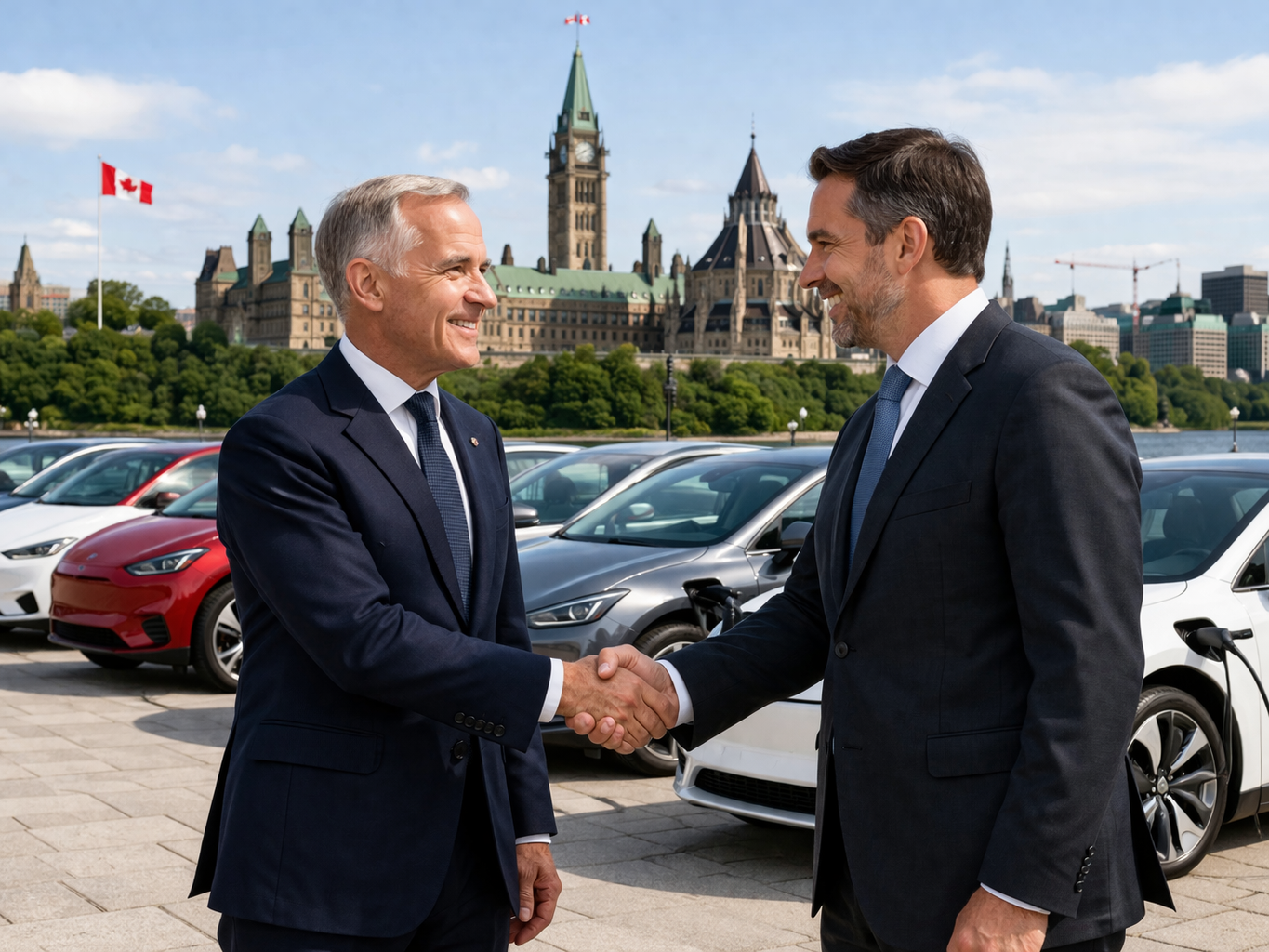
Prime Minister Mark Carney says the federal government will help launch a new Canadian electric vehicle company, describing the move as both an industrial strategy and a necessary response to the accelerating climate crisis.
Carney made the announcement Wednesday, saying the startup would receive federal backing and be structured to remain Canadian-owned, with a mandate to build affordable electric vehicles for domestic use. He said the project would help Canada capture more value from its own economy while reducing reliance on foreign automakers and imported supply chains.
Under the plan, the company would begin producing electric vehicles designed specifically for Canadian conditions: long winters, rough roads, rural distances and the increasingly spiritual experience of hearing the word “affordable” attached to a vehicle that costs more than your parents’ first house.
The idea, officials said, crystallized for Carney while reviewing reports about an extreme heatwave in California during a flight back to Ottawa. One senior government source said the prime minister had been reading climate briefings, staring out the window at the atmosphere, and quietly reaching the conclusion that Canada could no longer keep addressing climate change by “holding panel discussions, mining critical minerals, and then politely letting everybody else have the industry.”
“There is no reason Canadians should be waiting for other countries to build the clean economy we keep saying we want,” Carney told reporters. “We have the people, the resources, the industrial base and, increasingly, the emotional motivation.”
A background document circulated to reporters said the company would receive seed funding from Ottawa and be tasked with building vehicles that were practical, reliable and “not designed exclusively for venture capitalists, tech bros, or people who refer to a car’s dashboard as a user ecosystem.” Early concepts reportedly included a compact SUV, a commuter vehicle built to survive February, and a pickup truck aimed at Canadians who would like to lower emissions without being trapped inside a giant iPad with cup holders.
Officials said public ownership safeguards would be included to prevent the company from being sold off at the first sign of success to a foreign conglomerate that would shut down domestic production, keep the logo, and continue running ads with lakes in them. The government, the document said, was responding to the widespread feeling that Canada should probably be doing more with its own resources than exporting them and buying everything back later at a premium.
Reaction from opposition parties was swift. Alberta Premier Danielle Smith said she would need to review the proposal, but warned that any federally backed EV company sounded like “a taxpayer-funded golf cart for Laurentian elites.” She accused Ottawa of trying to replace the free market with “a state-sponsored hatchback experiment dreamed up somewhere between Davos and a guilt spiral,” and said that if the federal government was now prepared to build cars, Alberta might need to consider “a full range of sovereign responses, up to and including an emotionally necessary prairie separation.” Smith later clarified that she still believed in a strong Alberta within a united Canada, but added that “national unity becomes harder to defend when Ottawa starts acting like Elon Musk with a pension and a public-sector dentist.”
Conservatives accused the government of trying to create “Tesla, but with more committees,” while New Democrats said the Liberals had once again taken a potentially good idea and wrapped it in the tone of a bank apologizing for record profits.
Industry analysts said the proposal was unusually well calibrated for the current national mood. It touched on climate anxiety, affordability concerns and the growing sense that Canada had spent the last several decades excelling at digging things out of the ground, shipping them away and then acting pleasantly surprised when someone sold them back to us in a shinier form for four times the price.
Canadians online reacted with a mix of suspicion, enthusiasm and immediate unsolicited branding suggestions. Proposed names for the company included Maple Current, Dominion Electric, Civic Duty Motors and the far less marketable Crown Victoria 2.0. One suggested slogan — Built in Canada, because apparently we have to do everything ourselves — was said to be testing strongly with voters under 45 and men who own three different snow brushes.
Drivers also appeared intrigued by the possibility of an EV designed by people who had, at minimum, encountered sleet before. “If they make one that starts in February, survives a pothole, and lets me turn on the heat without agreeing to a software update, I’m interested,” said one man in Regina, standing beside a pickup truck that currently used about 16.7 litres per 100 kilometres and drew several passive-aggressive comments from his children.
Government insiders said the company’s first prototype would focus on practical features Canadian buyers had been asking for for years, including real buttons, actual winter range, and a trunk large enough to hold hockey equipment, emergency blankets and the faint remains of middle-class optimism.
By late morning, the announcement had been confirmed as an April Fools’ joke, though not before prompting a burst of sincere online discussion about whether the fictional plan made more sense than several real industrial policies. The Prime Minister’s Office did not comment on whether anyone inside government had briefly asked, in complete seriousness, “Wait, why aren’t we doing this?”
At press time, thousands of Canadians were still asking the same question: why does every fake climate policy sound more practical than the real ones?


©2026 CBC/Radio-Canada. All rights reserved.